
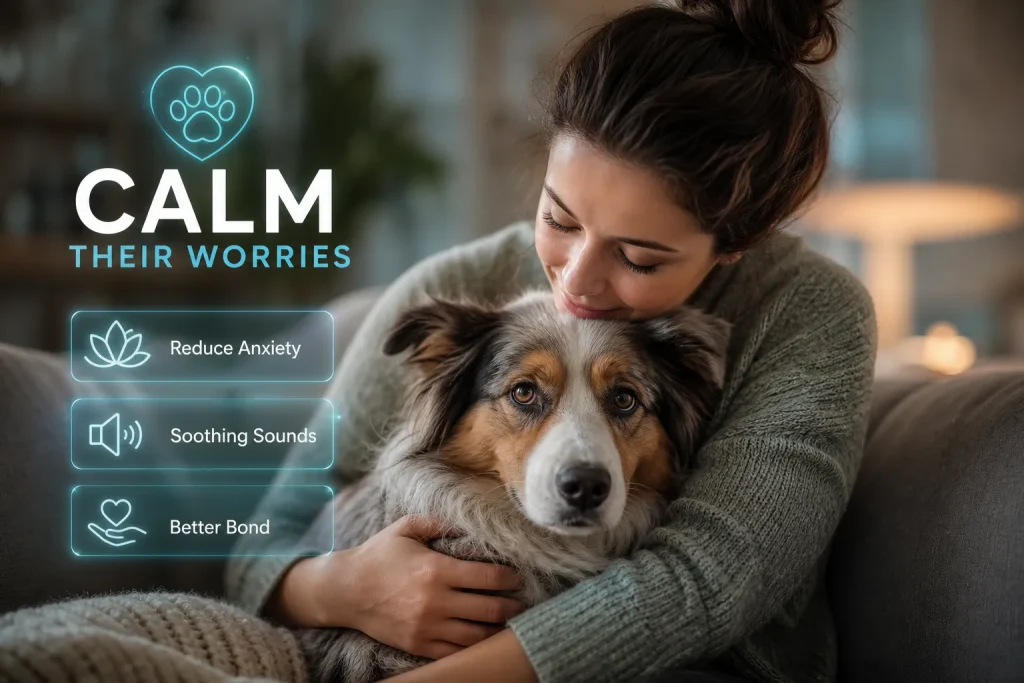
Picture this: you leave for work in the morning, and by the time you return, your dog has torn through the couch cushions, scratched the door frame down to the wood, and emptied the bin across the kitchen floor. Or your cat, once sociable and curious, disappears under the bed for three days the moment you rearrange the furniture. These animals aren't being difficult. They're not acting out for attention. They're communicating fear the only way they know how, and they need you to listen.
Carrying that worry for a struggling pet is exhausting. The guilt of leaving, the helplessness of watching them shut down, the cycle of trying something new only to see it fail again. Many pet owners spend months searching for anxious pet solutions without ever finding a plan that actually sticks. This guide changes that. You'll find practical, evidence-based strategies covering home environment adjustments, behaviour modification, calming aids for dogs and cats, and prescription medication. And at the end, there's an approach many owners haven't considered yet, one that asks not just how to calm your pet, but what they're actually trying to tell you.
How to recognise anxiety in your dog or cat
Every effective anxious pet solution starts with accurate identification. What looks like stubbornness, naughtiness, or laziness is often anxiety wearing a disguise. Recognising the signs early gives you a genuine head start, because the sooner you name what's happening, the sooner you can act with the right tools.
Physical signs that something is wrong
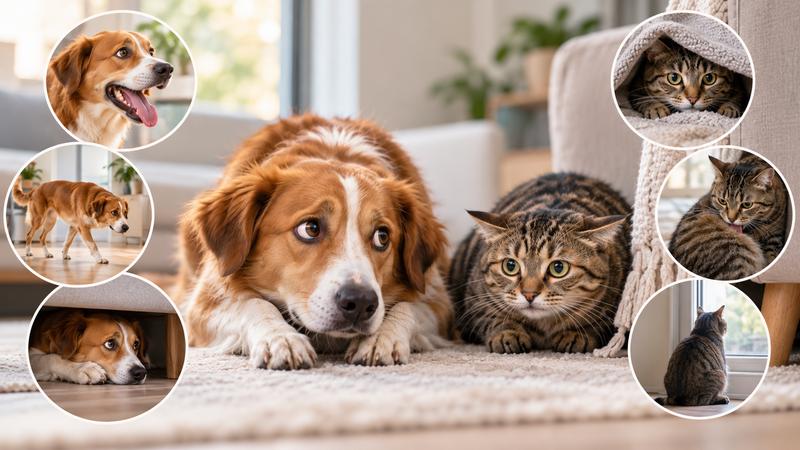
In both dogs and cats, anxiety shows up in the body before it shows up in behaviour. Watch for panting (especially when it's not hot and your dog hasn't been exercising), trembling or shaking, dilated pupils, drooling, a lowered body posture, tucked tail, and tense muscle tone across the face and back. Dogs will often display "whale eye," where you can see the whites of their eyes, or hold their ears flat against their head. Cats may crouch low, flatten their ears, or groom excessively in a way that seems almost compulsive.
Here's the important caveat: many of these physical signs overlap with symptoms of pain, illness, or neurological issues. A vet check is always a sensible first step. You know your pet's baseline better than anyone, so trust your instincts when something feels off.
Behavioural changes that signal deeper distress
Beyond the physical, anxiety reshapes how a pet interacts with the world. Dogs often pace, vocalise excessively, become destructive, soil the house even when they're toilet trained, or swing between being glued to their owner and suddenly withdrawing. Cats tend toward hiding, reduced appetite, changes in litter box habits, and a quiet withdrawal from the social connection they once sought.
The key distinction is between a one-off stress response and a persistent pattern. A dog who pants during a thunderstorm is reacting normally to a loud, strange experience. A dog who pants, paces, and destroys things every time you leave the house, three times a week, every week, is dealing with something that needs a structured plan. Your three markers are frequency, escalation, and impact on daily quality of life.
When to take the signs seriously
Mild, situational stress responses, nerves at the vet or skittishness around strangers, can often be managed with the home strategies covered below. But when anxiety is frequent, escalating over time, or causing physical harm such as weight loss, self-directed wounds from over-grooming, or injuries from frantic attempts to escape, it warrants proper veterinary assessment and a structured plan. Studies suggest a significant proportion of Australian dogs experience anxiety at some point in their lives. This is not a rare problem, and it's not one you need to figure out alone.
Anxious pet solutions: creating a calm environment at home
Before reaching for supplements or booking a specialist, there are meaningful, evidence-backed changes you can make at home. These are core components of evidence-based, multimodal anxiety management plans, and skipping them makes every other intervention harder.
Safe spaces and a predictable daily routine
Security comes from structure. A consistent daily schedule for meals, walks, play, and rest tells your pet's nervous system: this world is predictable, and predictable means safe. Cornell University's behaviour guidance lists predictability as one of the most effective first-line strategies for anxious pets, and it costs nothing. Schedule it, stick to it, and watch the baseline stress level drop over time.
Pair that routine with a dedicated retreat space. For dogs, this might be a bed tucked into a quiet corner or a den-style covered crate left open and unchained. For cats, an elevated resting spot or a quiet room with familiar scent works well. The goal is a place your pet chooses to go when the world feels overwhelming, somewhere they associate entirely with safety. Don't force them in; let them discover it themselves.
Exercise, enrichment, and mental stimulation
Physical exercise is one of the most underutilised tools for anxious dogs. Regular movement reduces circulating stress hormones and gives the nervous system a healthy outlet. As a general guide, small breeds typically need around 20 to 30 minutes of daily activity, medium breeds benefit from 60 to 90 minutes, and large or working breeds often need 90 minutes to two hours, though exact needs vary by breed, age, and health. Consistency matters more than intensity; daily moderate exercise outperforms occasional exhausting sessions.
Mental stimulation works alongside physical exercise, not instead of it. Puzzle feeders, sniff walks where your dog leads with their nose, scent games, and food-dispensing toys all give the brain a job to do. A mentally engaged pet has far less capacity for anxious rumination, and this is especially true for intelligent breeds who become destructive when under-stimulated.
Music, white noise, and sensory calming
Calming music and white noise are low-risk, easily accessible tools that help some pets, particularly those sensitive to sound triggers. Species-specific music for cats has been shown in veterinary studies to reduce stress responses during clinical care. For dogs left alone, background music or a white noise machine can soften the jarring silence of an empty house. Position this honestly: it supports some pets meaningfully and makes little difference to others. It's a useful layer within a broader plan, not a standalone fix.
Behaviour modification that actually changes the pattern
Managing symptoms is not the same as resolving anxiety. Behaviour modification works at the level of the emotional response itself, gradually rewiring the association between a trigger and a fear reaction. In practical terms, this means the pet learns to feel differently about the situation rather than simply learning to suppress a response. For separation anxiety in pets particularly, this is where lasting change comes from, because it addresses the underlying emotional state rather than just the surface behaviour.
What desensitisation and counter-conditioning actually mean
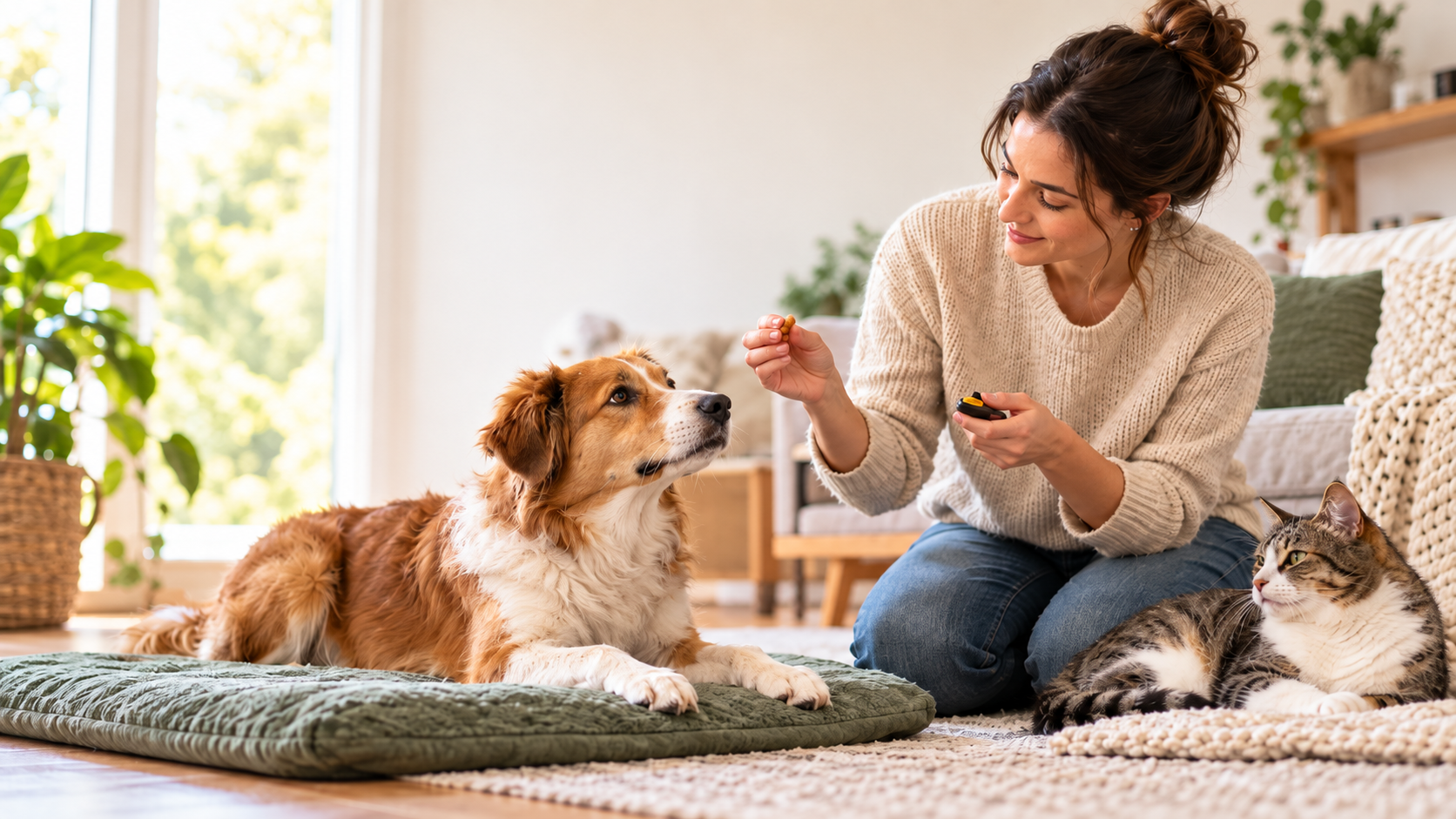
Desensitisation means introducing the anxiety trigger in doses so small and manageable that they don't provoke a fear response. Counter-conditioning means pairing that trigger with something genuinely good, so the emotional association shifts from "that means danger" to "that means something nice is coming." Together, they're the most evidence-supported approach available for pet anxiety help across both dogs and cats.
A practical example: if your dog spirals the moment you pick up your car keys, you begin by picking up the keys, giving a treat, and immediately putting them down. You repeat this multiple times a day with no actual departure attached, until the keys become a cue for a snack rather than a cue for panic. Only then do you begin adding tiny, incremental departures.
Anxious pet solutions for separation anxiety: a step-by-step approach
Start by identifying the exact moment your pet's anxiety begins. For many dogs, it's a specific cue long before you actually leave: putting on shoes, picking up your bag, or saying a particular phrase. Find the shortest absence your pet can tolerate without distress, even if that's ten seconds, and begin there. Return before the anxiety escalates. Reward calm behaviour consistently, not frantic reunion behaviour.
Extend absences in tiny increments only once the current duration is reliably calm. In clinical practice, owners typically begin to see measurable improvement within two to six weeks with regular practice sessions, though robust resolution often takes several months. The single biggest mistake owners make is rushing the process. One setback from pushing too far too soon can undo weeks of progress.
What accidentally makes anxiety worse
Excessive reassurance, though it comes from love, can inadvertently reinforce anxious behaviour by signalling that there is, in fact, something to worry about. Punishment for destructive behaviour caused by anxiety adds fear to an already fearful situation and makes things worse. Inconsistency, in routine, in the training process, or in how different family members respond, also slows progress significantly. None of these mistakes make you a bad owner. They make you a human one.
Calming aids and supplements: what the evidence actually says
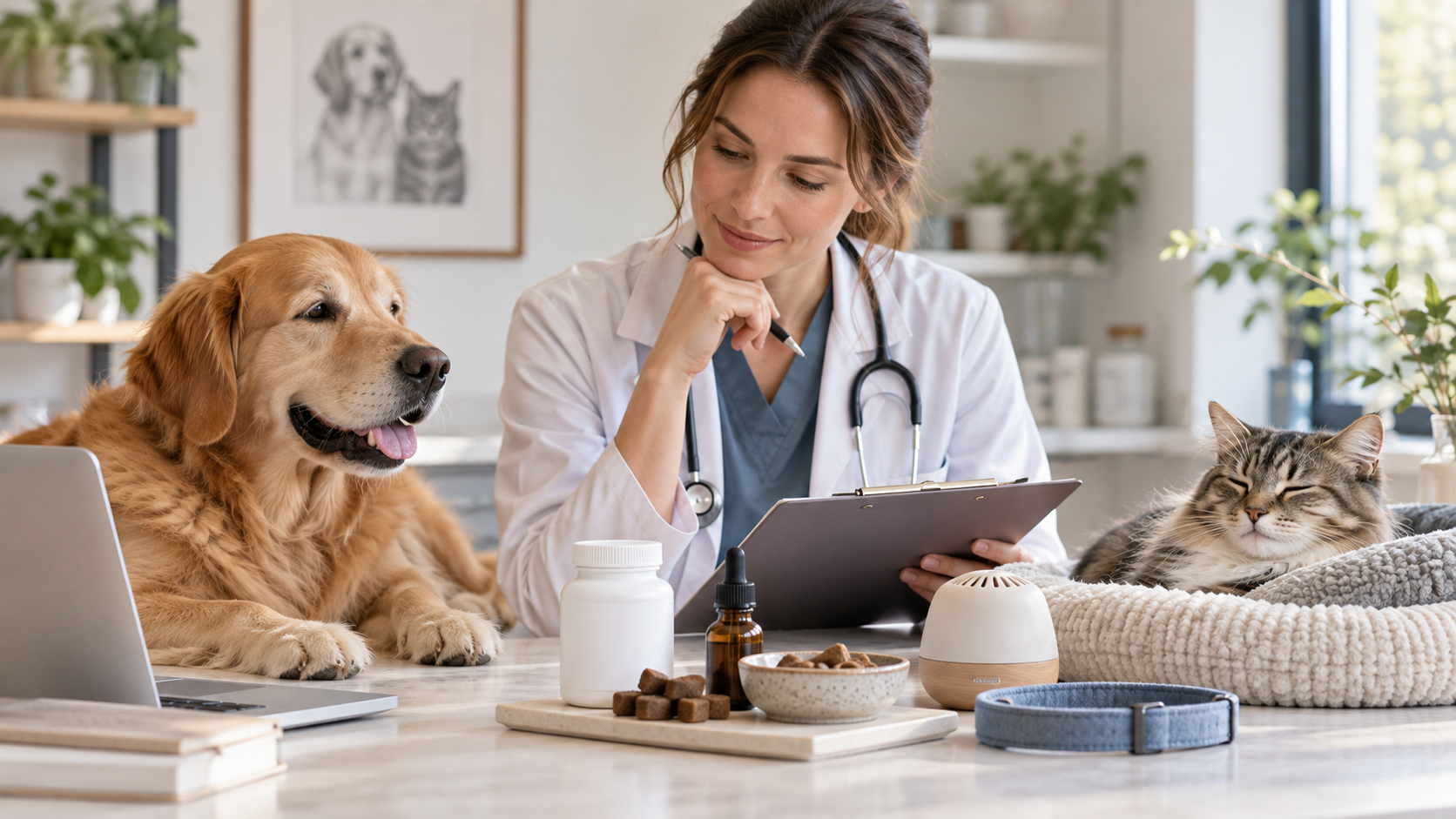
The supplement aisle is full of promises, and the evidence behind different products varies enormously. Here's an honest look at what veterinary research actually supports, so you can make informed choices rather than expensive guesses.
Pheromone products and how they work
Adaptil for dogs and Feliway for cats are synthetic versions of the appeasing pheromones mother animals produce with their young. They're species-specific and carry no documented side effects when used correctly. Veterinary sources note they can be used alongside prescription medications including fluoxetine, though it's always worth confirming this with your vet when multiple treatments are prescribed. The evidence shows moderate benefit for situational stress triggers like thunderstorms and travel. For generalised or separation-related anxiety, the evidence is weaker. Use pheromone diffusers, Adaptil or Feliway, as a helpful adjunct within a broader plan, not as the whole plan.
Supplements worth considering
Alpha-casozepine and casein hydrolysate are among the better-studied options for mild anxiety in dogs, derived from milk proteins and considered low risk. L-theanine has plausible mechanisms and reasonable safety data, though the clinical evidence in dogs remains limited. CBD sits in its own category: product quality varies enormously. As a category, these supplements suit mild, situational stress rather than moderate to severe anxiety, and none are a substitute for veterinary guidance and behaviour modification.
When your vet needs to be part of the plan
Medication is not a last resort, and it's not a quick fix. For many pets with moderate to severe anxiety, it's a legitimate and compassionate tool that makes behaviour modification possible by lowering the fear threshold enough for learning to occur.
Daily medications versus situational options
Daily baseline medications, including SSRIs like fluoxetine and tricyclic antidepressants like clomipramine, are used for chronic, persistent anxiety. They typically take several weeks to reach full effect, so patience and monitoring are essential. Situational medications, including trazodone, gabapentin, benzodiazepines like alprazolam, and dexmedetomidine gel for noise phobia, are designed for predictable one-off events such as fireworks, travel, or veterinary visits. They work faster but aren't suited to daily use. Again when other things don't work and have been consistently tried.
Common prescriptions and what to monitor
Fluoxetine is widely used for separation anxiety in both dogs and cats; common side effects include reduced appetite, lethargy, and occasional gastrointestinal upset. Trazodone is a popular situational option with sedation, vomiting, and rare paradoxical excitation as possible effects. Gabapentin works well as an adjunct and is particularly useful for noise phobias, with sedation and unsteadiness as the main side effects to monitor. Alprazolam is effective for acute panic events, with sedation and, rarely, behavioural disinhibition as considerations. All of these veterinary anxiety treatments work best alongside behaviour modification. Go into your vet appointment knowing what to ask, and don't hesitate to contact an animal communicator if standard approaches aren't producing results.
Understanding the emotional root cause through animal communication
Here's something worth sitting with: some anxious pets go through every appropriate intervention and still don't fully recover. The environment improves, the training is consistent, the medication is dialled in, and yet something remains unresolved. This is often because the underlying emotional experience has never been directly addressed.
What animal communication reveals that other methods miss
Anxiety is always communicating something. A pet's fear might be rooted in a past experience you're not aware of, an unresolved tension in the household, a physical discomfort they can't verbalise, or a deep emotional need that simply hasn't been understood. Conventional approaches work on the behaviour and the body. Animal communication works on the story behind the behaviour, the "why" that training and medication can't always reach.
Trisha McCagh describes what she practises as a silent language between species, a form of inter-species dialogue that, in her view, is available to anyone willing to learn how to listen. Some owners who explore this approach report that it surfaces insights about their pet's history or emotional state that weren't accessible through other means, bringing meaningful shifts to how they understand and respond to their animal.
How a private consultation with Trisha McCagh can help
Animal Talk with Trisha McCagh offers private consultations for pet owners who want to understand what's driving their animal's anxiety from the inside out. In a one-on-one session, Trisha works as a translator between you and your pet, exploring the emotional context behind the distress and offering insights that can reshape how you respond to each other. Many owners report a greater sense of clarity about their pet's experience, and a renewed sense of direction for what to try next.
If you've worked through the practical steps and still feel like something important is missing, a private consultation is a compassionate and practical next step. Reach out to the Animal Talk team directly to find out what a session involves and whether it's the right fit for you and your animal.
Learning to communicate with your pet yourself
For those drawn to developing this skill directly, the Pet Talk Program offers everyday pet owners a structured, accessible pathway to begin two-way conversations with their animals. For those who feel called to a deeper professional journey, the Animal Talk Institute's certified practitioner programme offers a comprehensive certification pathway in animal communication. Understanding your animal's silent language is a learnable skill, and owners who develop it often find it changes the entire texture of their relationship.
A calmer, more connected path forward
Your pet's anxiety is specific to them. What works depends on the individual animal, the nature and severity of their anxiety, and what you're realistically able to sustain as their owner. The most effective approach is always layered: a calm environment and predictable routine form the foundation, behaviour modification builds on top of that, and supplements or medication are brought in where the clinical picture warrants it. Staying open to the emotional story behind the behaviour, not just the behavioural symptoms, can unlock progress that other approaches miss.
Progress with an anxious pet is rarely linear. There will be steps forward and occasional steps back. What matters is that you keep showing up with curiosity rather than frustration, because your pet is always communicating something, and they need you to keep listening. Starting small, even just establishing a consistent daily routine this week, is a meaningful first step.
If you're ready to explore practical anxious pet solutions and want support that goes beyond the standard checklist, Animal Talk with Trisha McCagh is here to help. Get in touch with the team to find out more about private consultations, the Pet Talk Program, and the training options available through the Animal Talk Institute.

About the author